
The physical therapy profession has a new tool in the fight to reduce administrative burden. APTA's report, "The Impact of Administrative Burden on Physical Therapist Services," offers a comparison of all three of APTA's surveys on this topic, as well as an updated infographic that illustrates the challenges providers and patients face.
The latest survey, conducted in mid-2025, found that administrative requirements imposed by payers continue to significantly burden physical therapists and negatively impact patient care.
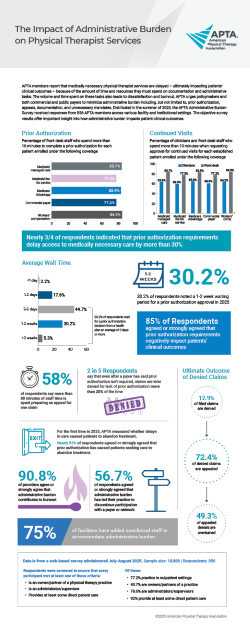
Key Findings from APTA's Administrative Burden Report
- Delays are increasing: 30% of PTs now report waiting one to two weeks for prior authorization approval — up 9 percentage points since APTA’s first survey in 2018. Additionally, 80% of respondents say they wait for a prior authorization decision from a health plan an average of three days or more.
- Patient outcomes are worsening: 85% of respondents reported that prior authorization negatively affects patients’ clinical outcomes, compared with 74% of respondents in 2018.
- Patients are abandoning care: 83% of respondents agreed or strongly agreed that authorization delays have caused patients to stop treatment altogether.
- Operations are strained: 3 out of 4 practices have hired administrative staff solely to manage payer requirements, diverting resources from patient care. Nearly 60% of respondents say that more than 30 minutes of staff time is spent preparing an appeal for a single claim.
- Rising costs and burnout: 57% of respondents reported that administrative burden has forced their practice to discontinue participation with at least one payer network. Plus, 91% of providers agree or strongly disagree that administrative burden contributes to burnout.
"The data is clear — administrative burden is excessive, unsustainable, and continues to hinder both physical therapists and the patients they serve," says APTA President Kyle Covington, PT, DPT, PhD. "Without meaningful reform, these barriers will continue to strain the workforce and impede timely access to care."
The report offers comparisons between 2018, 2022, and 2025 survey data, in addition to breaking down average time spent on prior authorization by type of health coverage. Respondents were also asked about the peer-to-peer review, denials, and appeals.
How You Can Join APTA's Advocacy Fight to Reduce Administrative Burden
PTs, PTAs, and students can join APTA in fighting to reduce administrative burden by using the infographic and report to:
- Show payers that excessive and unnecessary administrative requirements harm outcomes and discourage patients from accessing care.
- Urge lawmakers to require transparency, consistency, and timeliness in payer processes.
- Demonstrate for payers, regulators, and policymakers how administrative burden fuels provider burnout and undermines patient outcomes.
"Reducing administrative burden is central to APTA’s strategic priority of improving payment across all payers and regulatory reforms," Covington said. "By streamlining these requirements, we empower physical therapists to focus on patient care, improve financial sustainability, and ensure patients receive the services they need, when they need them."
APTA and state chapters continue to advocate — and make progress — on administrative burden issues. So far in 2025, APTA Indiana and APTA Oregon have been successful in enacting state legislation, while the California Physical Therapy Association is advocating for legislation. Contact your APTA state chapter to learn more about how you can support state-level advocacy aimed at prior authorization.
Members can join the APTA Advocacy Network for a closer look at APTA's advocacy efforts and to connect with other members working for change. Contact APTA's advocacy staff with any questions or to share how you've used the infographic and report for advocacy.