
Over the course of the public health emergency, APTA surveyed its members to monitor how the pandemic was affecting the physical therapy profession.
The association's final report, "Three Years of Physical Therapy in a Public Health Emergency: The Impact of the COVID-19 Pandemic on the Physical Therapy Profession," compares data from four surveys, the first one conducted in April and May 2020 and the last survey conducted in July and August 2022. Each survey offered a snapshot in time, which had their own unique state and federal guidance for health care professionals. APTA also created an infographic that summarizes some of the report's most significant findings.
As the public health emergency ends on May 11, the data shows the physical therapy profession has largely returned to its pre-pandemic norms, but there are some areas of the workforce that may be changed forever.
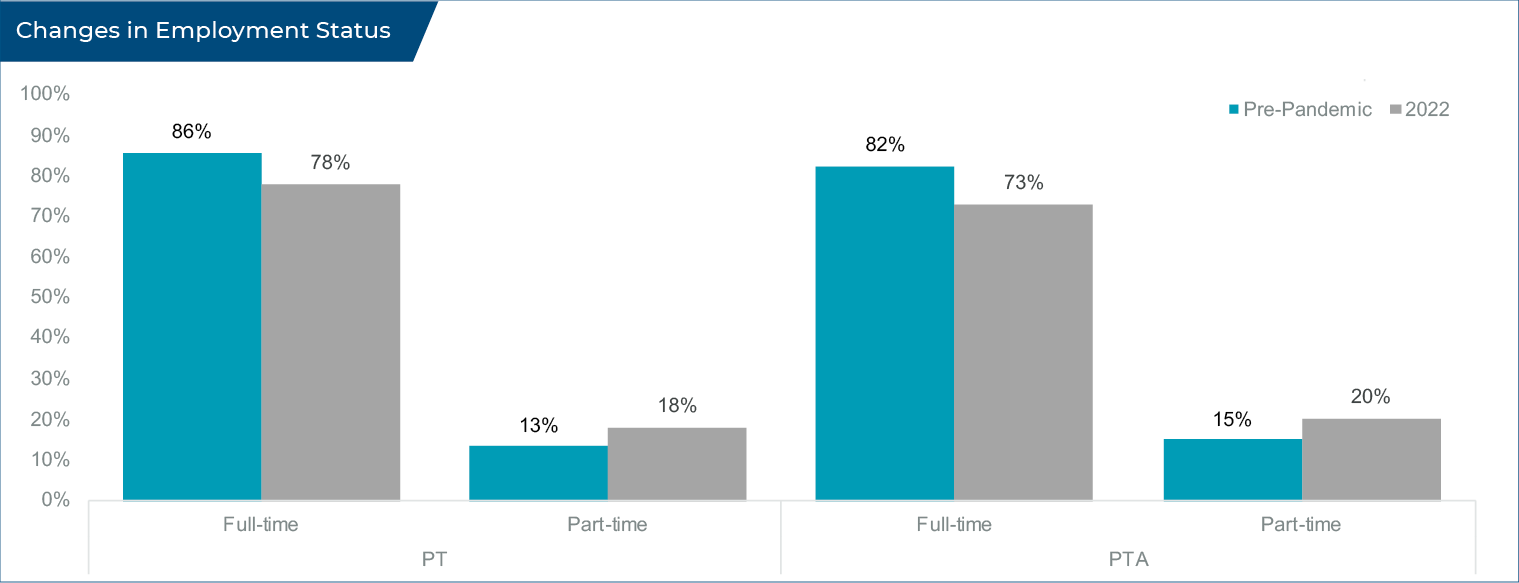
Fewer PTs and PTAs are employed full time compared with before the pandemic, and more PTs and PTAs are working part time. Before the pandemic, 86% of PTs and 82% of PTAs surveyed worked full time, compared with 78% and 73%, respectively, from the latest survey.
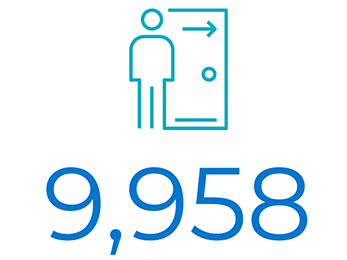 Nearly 10,000 more PTs left the workforce in 2021 than graduated into the workforce in 2021, according to data from the Commission on Accreditation in Physical Therapy Education and Definitive Healthcare.
About half of all PTs and PTAs surveyed reported knowing someone who has left the field of physical therapy.
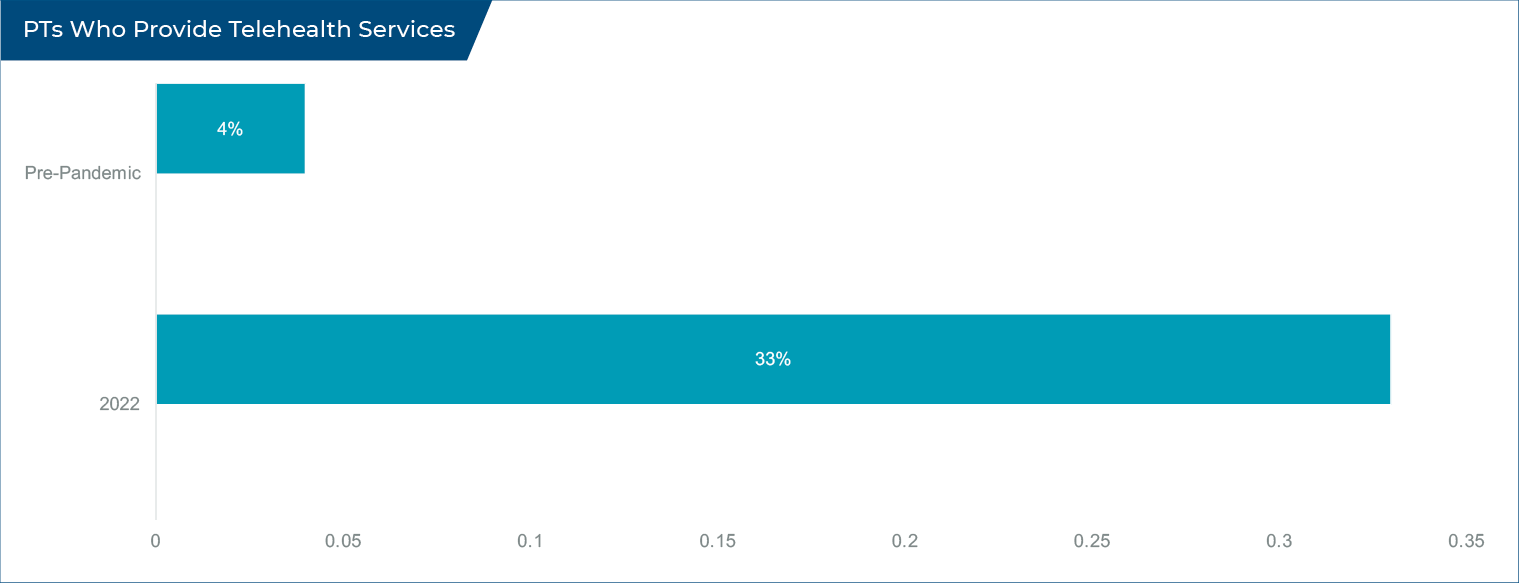
Before the pandemic, 4% of PTs said they used telehealth to provide patient care and 6% reported seeing one to five patients per week via telehealth. As of our latest survey, 33% of PTs reported that they provide telehealth-based services, with 25% of those seeing one to five patients per week using telehealth.
 About two-thirds of PTs reported seeing additional or more-severe conditions in their patient population that they attributed to lack of medical or physical therapy follow-up during the pandemic.
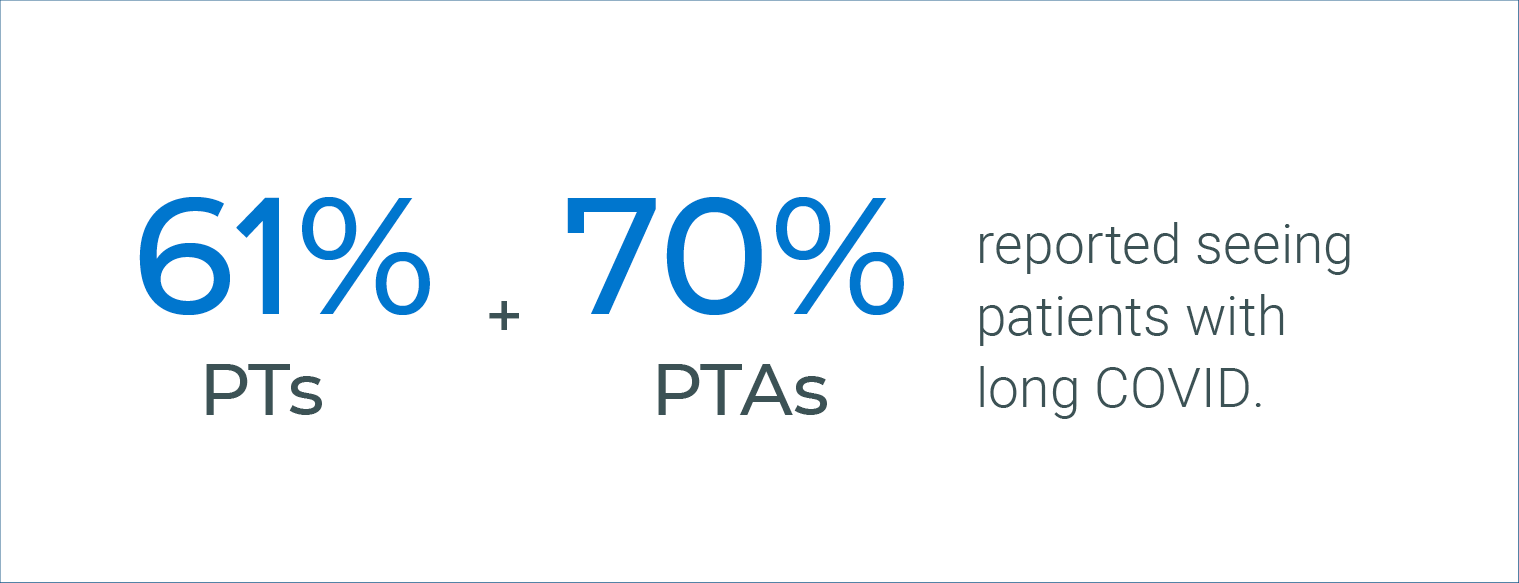
A majority of PTs (61%) and PTAs (70%) reported seeing patients with long COVID.
"In the three years since the COVID-19 public health emergency was first declared, our profession has overcome many challenges," said APTA President Roger Herr, PT, MPA. "But, given the number of delayed procedures, and with the lasting trends of long COVID still being measured, our work has just begun. PTs and PTAs will play a crucial role in helping shape our recovery from COVID-19."